This page tells two epic stories that became intertwined:
that of the hobby hot wire CNC cutting community in France and Belgium (to the left of the wire, marked ⬜),
mine — Renaud Iltis, the author of this site and, in the end, the creator of the HotWire4X universe (to the right of the wire, marked ⚪).
I tell them both as a historian and as a witness. Some dates are approximate — don't hesitate to contact me if you spot a mistake, if names are missing, or if you'd rather not be mentioned.
CommunityRenaud
1980s-90s
The early days
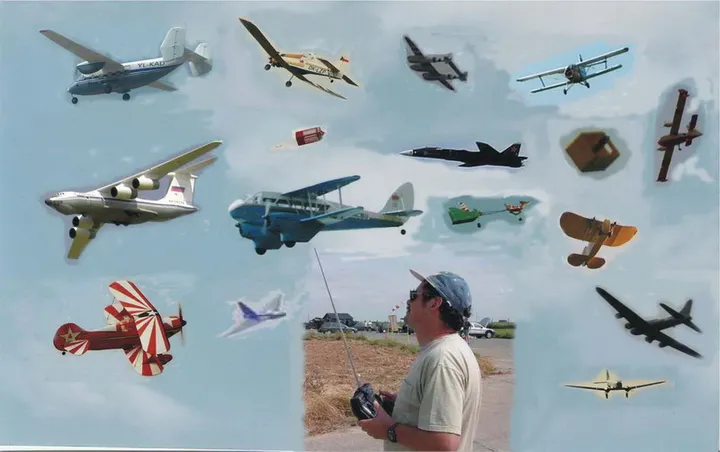
RC modelers — and aeromodeling itself — are what got hobby 4-axis hot wire CNC cutting started in France and Belgium.
The 1980s- Community
Aeromodeling is everywhere in France
Mostly under the general public's radar, there were aeromodeling clubs everywhere. Their members were mostly men (a little airplane must be drawn somewhere on the Y chromosome), marveling at the ability to fly a radio-controlled airplane or glider.
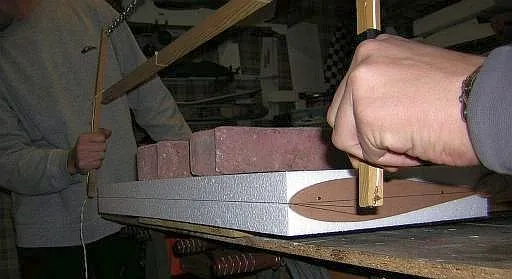
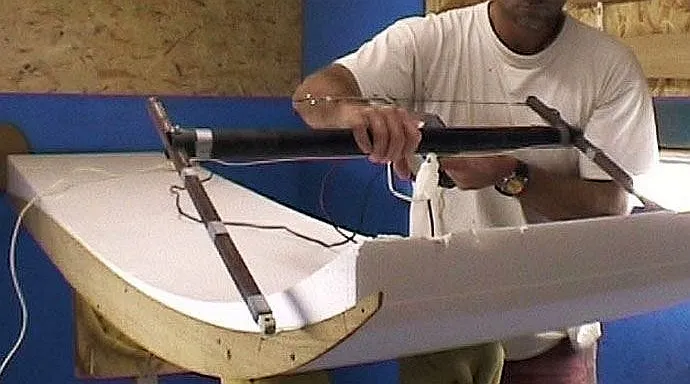
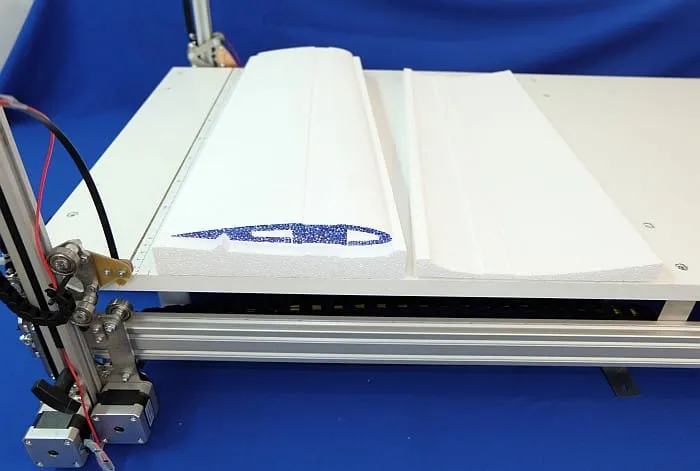
Modelers hot-wire cut polystyrene to make wing cores, then sheeted them with balsa or obeche. Templates were cut by hand — usually one for the upper surface, one for the lower. You'd slide a heated wire, stretched on a bow, along them, keeping both ends in sync as best you could. It went wrong every other time (unless you were very experienced or ran a pulley rig), and every new project meant making new templates.
Here, cutting as a two-person job, with a single template per side (photo credit: Alain and Régis Jacquin)
1989- Renaud
I build a balsa Westerly
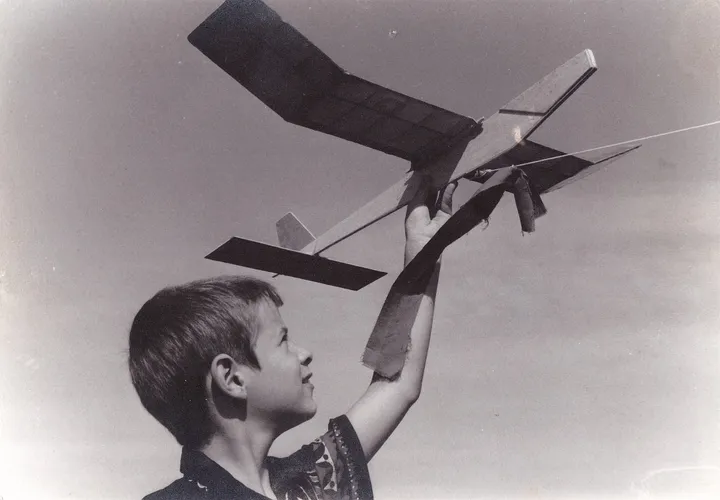
My high-school graduation year! I had discovered aeromodeling in primary school, building a kraft-covered balsa glider with Mr. Kannengiesser.
With the glider I built at school, during the Friday-afternoon workshops.
In my final year I crossed paths with Philippe, an aeromodeling enthusiast. He handed me photocopied plans for a Westerly, a trainer with a 1.5 m wingspan. I pestered my parents into a trip to Germany for balsa and Solarfilm, and built the plane all by myself on my bedroom carpet. Perfectly square but too heavy, it flew only once — with Philippe's radio gear on board, since I had none of my own.
I went on to a mechanical engineering degree, where I discovered industrial CNC machines, then an engineering diploma at INSA. Aeromodeling dropped out of my life for 12 years.
Mid-to-late 1990s- Community
Fed up with templates!
In Vendée, in western France, the company CROMA had been building professional hot wire CNC machines since the late 1980s. Its software ran under DOS, and computers were still expensive.
Then, as home PCs became widespread, a first hobby initiative appeared under DOS in the mid-1990s (Philippe Laflaquière, Franck Aguerre).
But it was the arrival of Windows 95 that truly brought the process into the hobby world (I found the name of Gérard Prat as another pioneer; there were probably others). The idea was to use the parallel port — the big 25-pin printer plug — to drive 4 stepper motors and an adjustable wire heat.
The Internet spread, mailing lists made conversation easy, and a community took shape: engineers, programmers, electronics people, thermodynamicists, pharmacists... modelers, most of them. That was the beginning of the CNC@Net community, which would live for years on a mailing list and on the Aero@Net website run by Olivier Ségouin.
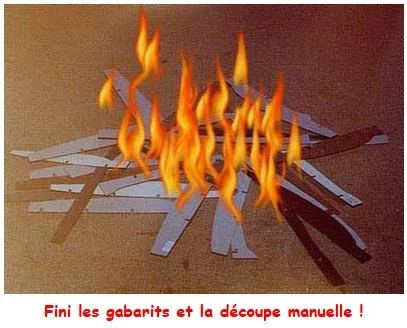
The memorable photo of the templates bonfire, from the CNC@NET homepage. (CNC = Computer Numerical Control)
Hobby hot wire CNC cutting came together as a movement in France, and progress snowballed: mechanics, electronics, software... and a growing grasp of the rules you must respect to get clean, accurate cuts with a hot wire in polystyrene.
Some notable names of that period: Bernard Baud, Didier Lannot, Gérard Prat again, Gilles Muller, Laurent Chef, Gérard Yvraut, Didier Jaillant...
1996- Renaud
Reunion Island and surfboards
Engineering degree in hand, I left for 16 months of national service on Reunion Island, in the Indian Ocean. I would stay... 15 years.
And that's where I met my wife 😍.
I took up surfing and shaped my own boards — starting from polystyrene blanks, hot-wire cut over handmade templates!
Same principle as wing cores, only bigger (photo credit: Antoine G., guidupetitshapeuramateur)
November 28, 1999- Community
The Bellegarde seminar
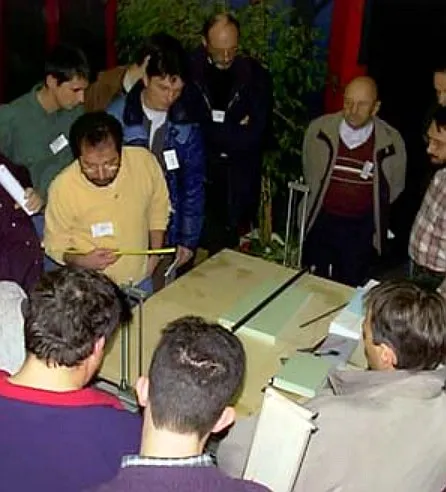
The first documented in-person meeting. The archives call it "the beginning of the saga" — though in truth, things were already well under way.
Until then, the community had known each other only in writing. From that day on, people met face to face: knowledge spread faster, and so did progress.
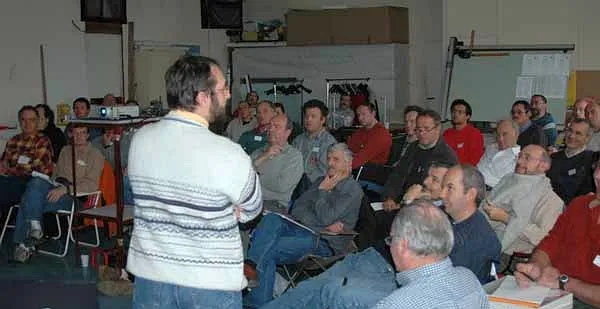
The Bellegarde meeting, in 1999.
1999-2004
The golden age
A period of intense progress. Everything got sharper, and dozens of machines were built across France and Belgium.
2001- Community
The year of the tools
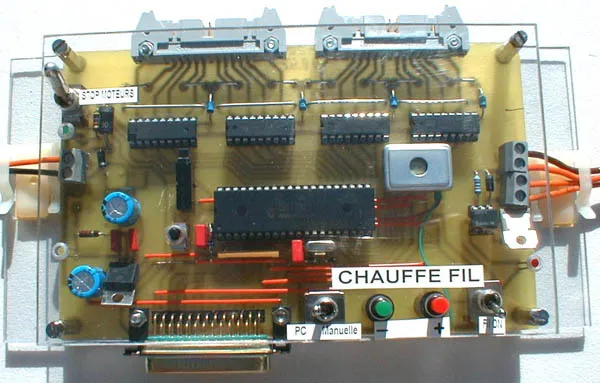
Michel Maury created the MM2001 board, merging Bernard Baud's BB2001 and Alain Gleyzes' Picachof around a PIC microcontroller. It would remain the standard for years — some are still running in clubs today.
Meanwhile, Gilles Muller's CNC.exe software matured into GMFC. And Gérard Prat published the plans of la Rustica: a machine you could build with a jigsaw, a drill and a bit of skill.
The MM2001 + GMFC duo would reign for fifteen years, powering as many different machines as there were builders — each builder adding his own inventiveness to improve (or degrade!) the original design.
A famous photo of the original MM2001.
2002- Community
Profscan and Papy Kilowatt
Wings were cut from standard airfoil files — but the process could plainly cut any shape. Roland Poidevin wrote Profscan, which vectorizes an image and converts CAD DXF files into the standard DAT format.
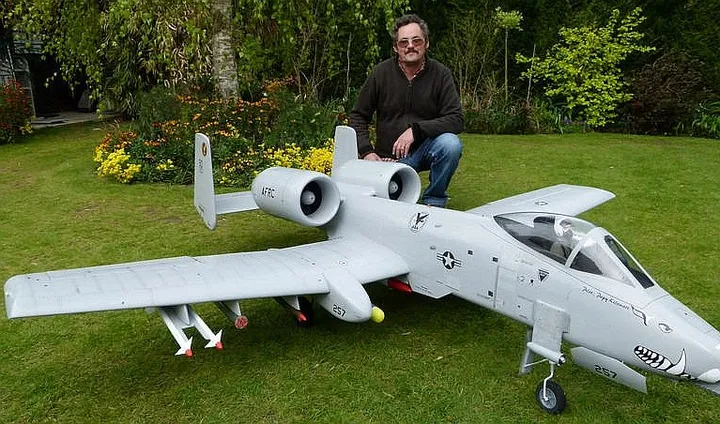
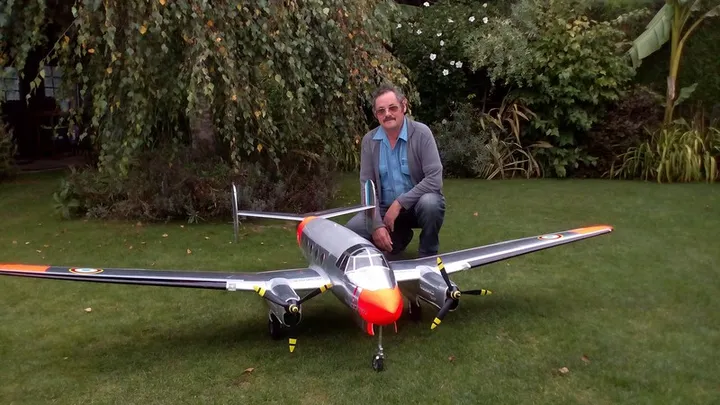
Around the same time, Philippe Carpentier — Papy Kilowatt — discovered CNC@Net and built a Rustica. Then he turned the wing-cutting machine into a machine for building entire airplanes: fuselages made of tapered sections, assembled, reinforced, covered, painted. Realistic scale models with wingspans up to 3 m, made entirely of polystyrene.
All of it on a table just 60 cm wide — enough for the tapered cuts he needed.
Philippe was staggeringly productive: a good thirty aircraft in ten years, while also designing the Spartia and then Super Spartia machines.
The Fairchild A-10 was one of his major builds. What a beauty!
October 23-24, 2004- Community
Orly, the Grand Gathering
The biggest meeting entirely devoted to hot wire CNC — and the last. Nearly 60 modellers, and a technology that had come of age.
Papy Kilowatt presented his complete method, from three-view drawing to flying scale model: 244 jaw-dropping slides. His biggest models were still to come, but the whole approach was already there.
Orly, 2004: the community's last big celebration.
And on the very last slide of the GMFC presentation, a strange bird made its first appearance: the USB port...
2002- Renaud
Pappy Boyington shows up 🤯
I became a dad and eased off the surfing. Around the same time, my buddy Éric handed me a crate full of RC gear. The little airplane in me woke up: I built Le planeur de Bruno ("Bruno's glider"), then the Shark, from plans found on the Internet.
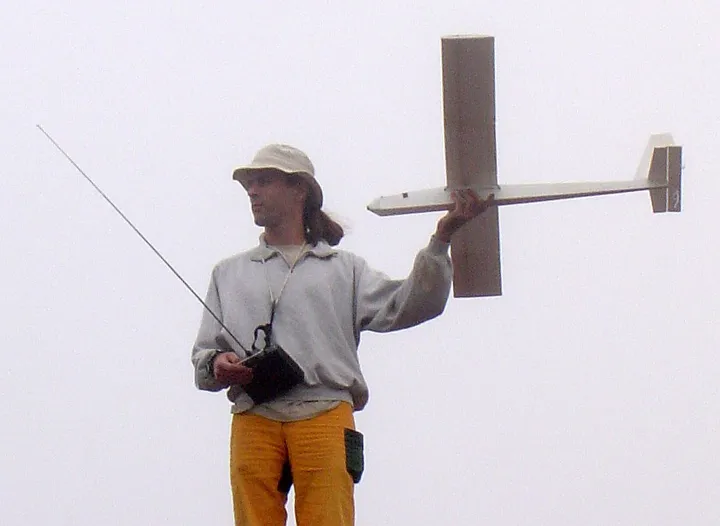
Ready for the Planeur de Bruno's first flight.
I vaguely learned to fly (and to fetch my models out of the sugarcane!), crashed more than reason allows, and made my first balsa-sheeted polystyrene wings, cut with a manual bow.
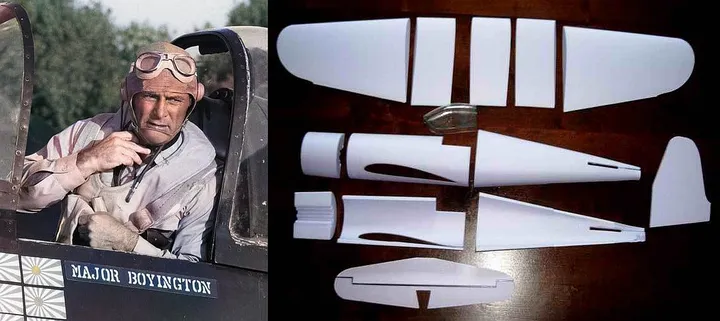
One evening — to the sweet song of a 56k modem, deep in the middle of nowhere — I stumbled upon a mini scale model of the Chance Vought F4U Corsair: Pappy Boyington's plane in Baa Baa Black Sheep, the TV series of my childhood!
That was it: I was hooked. More precisely, hooked by Papy Kilowatt's website — and there, jaw on the floor, I discovered 4-axis hot wire CNC cutting, able to produce the kit of a complete model in a single weekend!
The photo that started it all for me: the all-polystyrene Corsair kit by Papy (Kilowatt).
2003- Renaud
My first CNC, in a chicken coop
I spent two weeks devouring everything CNC@NET had ever published. One thing led to another, and I found myself assembling an MM2001 interface — me, who hadn't touched electronics since high school!
Then I built my first machine: a Spartia, the table designed by Papy Kilowatt. I set it up in an old chicken coop turned surfboard workshop, at the bottom of my garden on Reunion Island. At the controls: GMFC Lite on Windows 95, running on a PC rescued from a school's scrap pile.
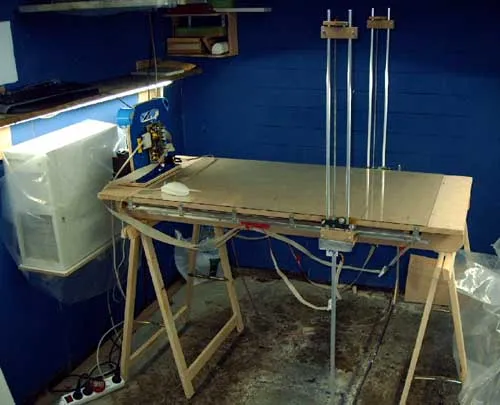
My first Spartia, in the chicken-coop shape room.
And it worked:
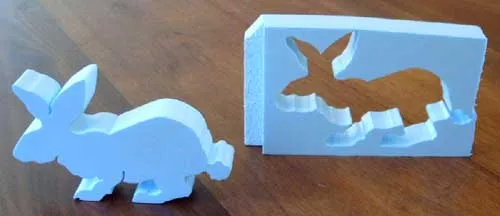
My first cut: a rabbit in blue XPS.
2004-2009
A busy mailing list, and dozens of beginners to help
2004- Community
Yahoo Groups, machines and models
The decoupecnc mailing list moved to Yahoo Groups: dozens of messages a day, new websites, shared projects. Fondly remembered: Grenade'indoor, run by Turbinator, a prolific designer of models and machines — and Pierre Dradin's site, the Belgian supplier who produced MM2001 boards "in series" for modelers in need.
The newcomers pitched in too. Christophe Lauverjat released Ré-échantillonnage ("Resampling"), a small VB6 utility that made airfoil synchronization simpler — Papy Kilowatt would use it a lot.
On the model side, EPP took off: "uncrashable" airframes, aerobatic gliders, even a flying wing built for dynamic soaring.
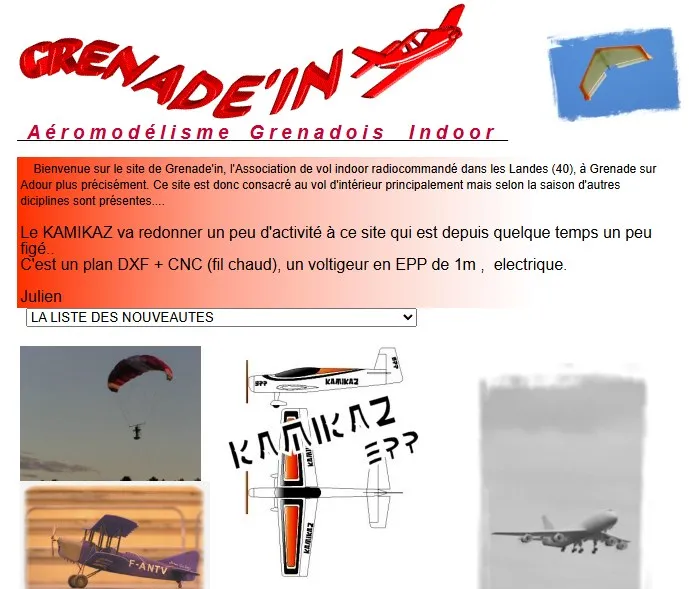
The Grenade Indoor homepage, featuring Turbi's hot-wire-cut EPP Kamikaz.
2004-2009- Renaud
Helping, building, designing, coding
I spent a lot of time on the decoupecnc list from my rock in the Indian Ocean, answering dozens of beginners — I had just been through every step they were living, in the same order.
I built often, flew little (sometimes with one of my daughters in the baby carrier 😉), crashed a lot. Not the best program for becoming a pilot. For getting good at cutting, absolutely.
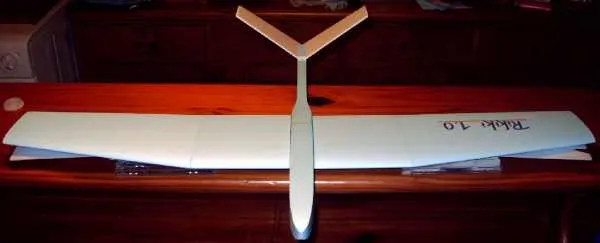
The Rikiki 1.0, a mini glider with a full-flying wing, 100% polystyrene.
I published the plans and build guide of the Super Spartia de Bureau ("Desktop Super Spartia"): a mini version of one of Papy Kilowatt's machines, sized for my desk rather than the bottom of my garden.
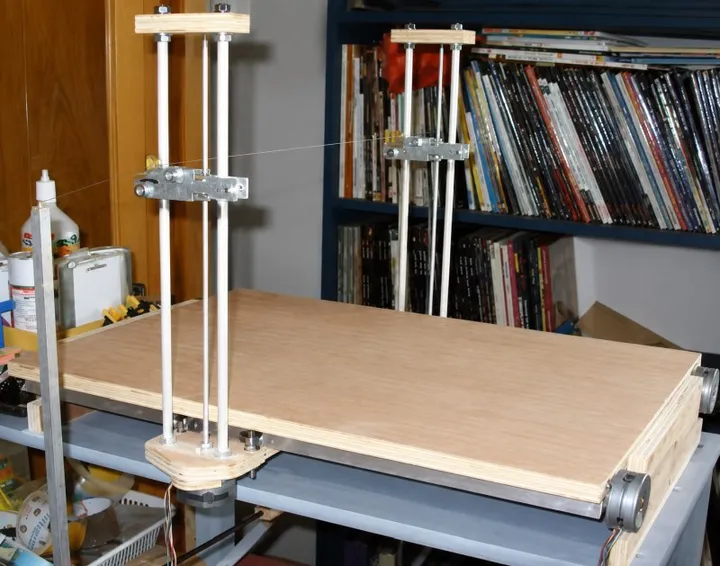
The Super Spartia de Bureau, in 2004.
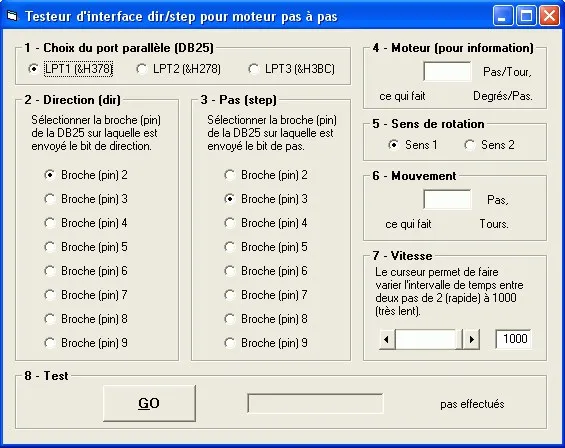
I taught myself VB6 and released my first utility: a motion tester for the MM2001.
2004-2009- Community
Parallel ports fade away
New PCs no longer had a DB25 socket: USB was replacing the parallel port. Yet the whole process relied on those Dir/Step signals, streamed to the machine in real time by the PC...
My first utility: testing the parallel port's Dir/Step outputs.
Solutions were being explored, but it's a tough subject: you need to talk over USB to an external interpolator — and nothing convincing existed yet on the hobby side.
So everyone guarded a precious old computer, dedicated to driving the machine.
2009-2012
The USB transition
PCs were changing; I pulled together a crack team.
2009-2012- Renaud
The birth of the 5X Project
In 2009 I "met" Pascal Langer on the decoupecnc list. A wizard in electronics and programming. One thing led to another, and we drew up the specs for a USB interpolator, to sit between the computer and any hot wire CNC board. I also had plenty of ideas for a cutting program more versatile than anything around.
Papy Kilowatt joined us as a tester, Roland Poidevin came to help me with the programming, and Loïc — modeler, piercer and tinkerer from Cambrai — signed on as tester and tutorial writer.
The interpolator would be called IPL5X, because it can drive up to 5 axes simultaneously. So the website became the 5X Project: I set up its structure and first articles, then Pascal and Roland took it over.
The 5X Project website banner.
2009-2012- Renaud
Mayotte, Complexes and RP-FC
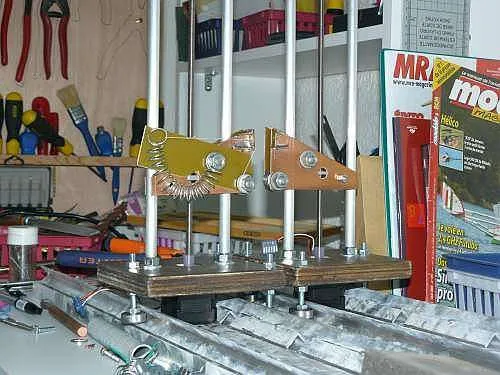
I moved to Mayotte for two years with my whole family. There — on the terrace — I built a hot wire CNC of my own design.
The carriages of my Mayotte machine.
I developed Complexes, a project-preparation program with a personal projection-based synchronization algorithm that Pascal helped me finalize. And I coded working mock-ups of every screen of the future cutting software.
Pascal wrote a DLL to talk to the IPL5X and another one to open DXF files; Roland did the final integration: RP-FC was born. A versatile, free program that Papy tested intensively, cutting ever bigger and ever more sophisticated models.
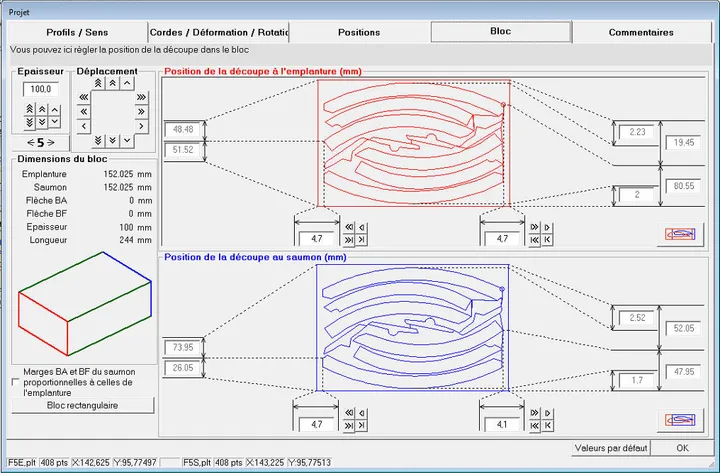
RP-FC: exact visual placement of the cut inside the block, with every dimension shown.
The 5X Project site soon offered the interpolator's plans, build tutorials, pinouts for 14 different boards, and the software. Machines were fitted with it all over: hobbyists had their USB solution — mission accomplished.
Pascal, Papy, Roland, Loïc, and the whole community: thank you from the bottom of my heart, guys. You were amazing!
Papy Kilowatt behind his MD-312 Flamant.
2013-2025
The entrepreneurial era
The field fell asleep on one side of the world — and woke up on the other.
2013- Renaud
I quit
An engineer by training, I had nonetheless spent 12 years teaching math and science in vocational high schools, on Reunion Island and then Mayotte. Worn down by a system standing on its head, I resigned in 2013 — and so did my wife (#team).
I wanted to make and sell my own products. Solo, master of my own time, owning my mistakes as much as my successes. I had been doing it for free for ten years; it would now be my job.
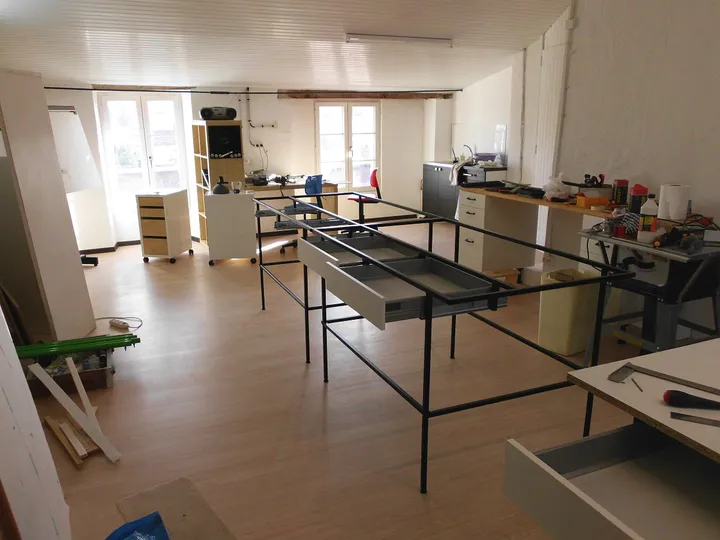
2013 : Setting up my new freelance workspace.
Zero entrepreneurs in my family, 90% civil servants: let's just say I had a lot of ground to make up.
The first wave of hobby 3D printing was just reaching France. I chose to stay on hot wire, away from the reliability lottery of the printers of that era (short term, not the best move — long term, absolutely).
2013-2016- Renaud
MiniCut2D and the Maker Faires
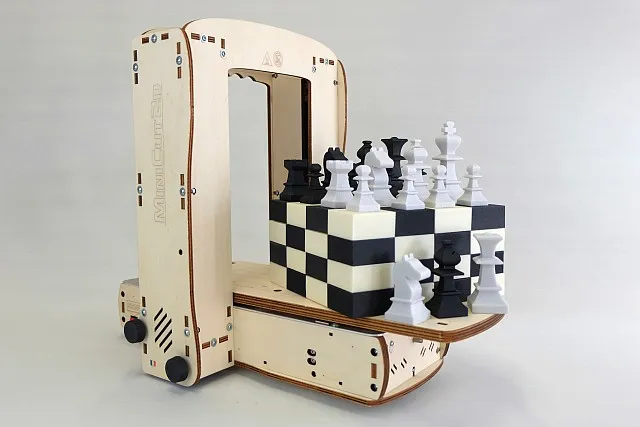
I designed and sold the MiniCut2D, a small 2-axis machine aimed at digital education. It found its audience in FabLabs, schools and with activity leaders — Igor Cochain built his income on this machine for years, something I am very proud of.
The MiniCut2D v1.2, with a nice example of what it can make.
To make it usable by everyone, I wrote MiniCut2D Software: intuitive for kids and beginners, capable for experts.
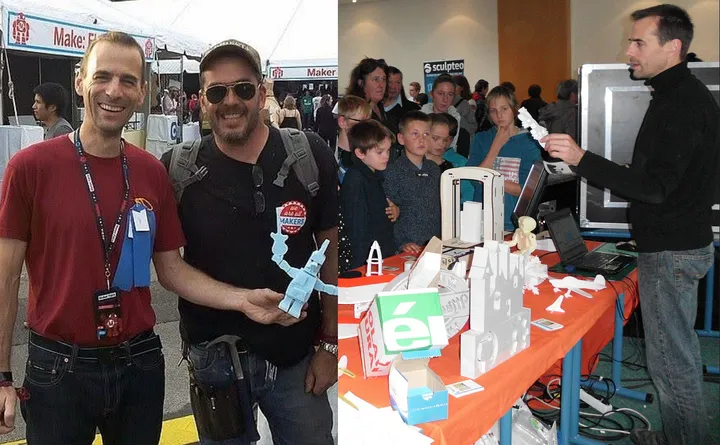
I spent three years evangelizing it: Maker Faire Saint-Malo, Paris, San Francisco, New York, Open Bidouille Camp Bordeaux, Nantes Maker Campus, the KIKK Festival in Namur (thank you Pierre Dradin, for the lodging and the XPS), Educatech... Five or six "Maker of Merit" ribbons, and a spot in the Pierron educational supplies catalog.
I even met Jimmy Diresta at Maker Faire New York.
2016- Renaud
The MC4X and FilChaudNX
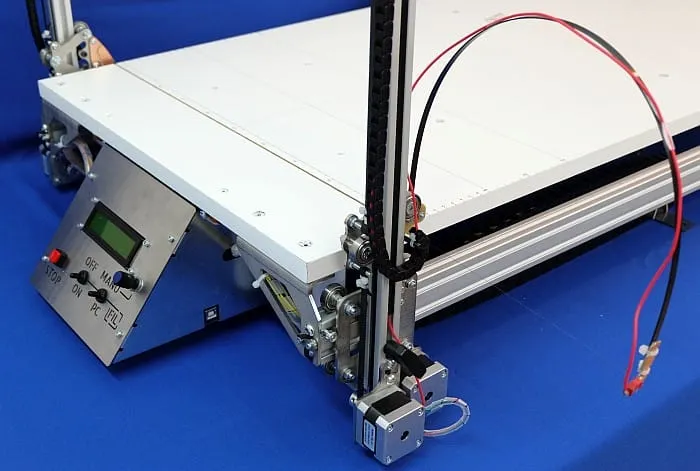
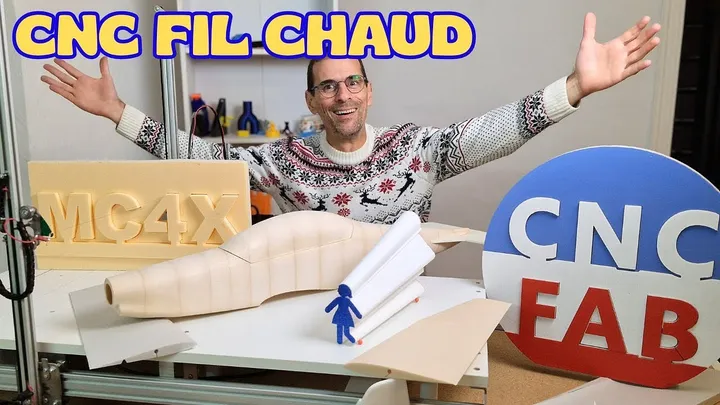
After years of development, I released the MC4X (Maxi Cut 4 aXes): belt drive, carbon-spring wire tensioning (a system invented by Turbi), aluminum extrusions, a guiding system of my own invention, laser-cut stainless-steel carriages. Sturdy, built to last, driven over USB.
The MC4X, an all-metal 4-axis hot wire CNC cutting machine.
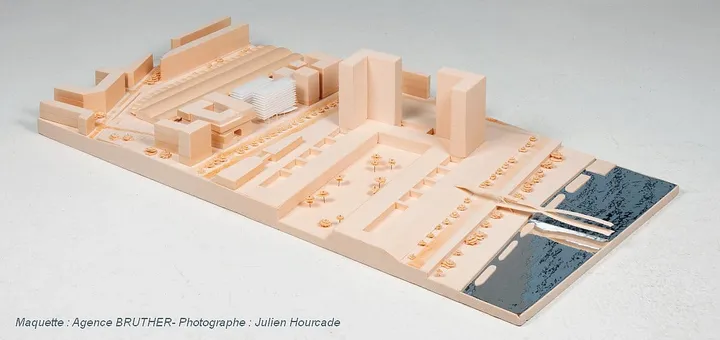
To go with it, I modernized Complexes into a full cutting program: FilChaudNX. Total freedom over the wire paths, variable kerf compensation with my own algorithm — it can handle any cut. Aeromodellers embraced it; professionals did too.
An architect's model made with the MC4X.
That was the start of ten years of production of complete kits, backed by an ultra-detailed manual and step-by-step videos: anyone could assemble a high-performing machine in a few days.
With its cable chains and no bow, the machine is compact — nothing sticks out.
2016- Community
The silence begins
Our friend Papy Kilowatt passed away. The pioneers were aging, the lists went quiet, the websites stayed online with nobody left to update them. The French community that had invented it all was slowly falling asleep — online, at least.
Philippe's website, kept online by his friends, is still up today.
Clubs kept cutting, workshops kept buying MC4Xs... but the fizz had gone out of the soda!
2016-2025- Renaud
Ten years of MC4X
Modellers, clubs, FabLabs, engineering schools, craftsmen, architects, artists, companies... More than 140 MC4X machines went out across France, Switzerland, Belgium, Italy, Spain — and even Africa!
YouTube videos, a SketchUp ↔ FilChaudNX plugin, complete projects, online training: intense years.
A thumbnail from my YouTube channel, full of example projects cut on the MC4X.
around 2020
English-speaking makers (re)discover hot wire CNC
Plans start appearing on the English-speaking side, built on 3D-printer electronics... and on a French firmware (yes, again!).
Yet some of these machines repeat, twenty years later, mechanical choices that were tried and abandoned in 1999: drawer slides, heavy carriages, slow drives...
2020- Community
The RAMPS electronics
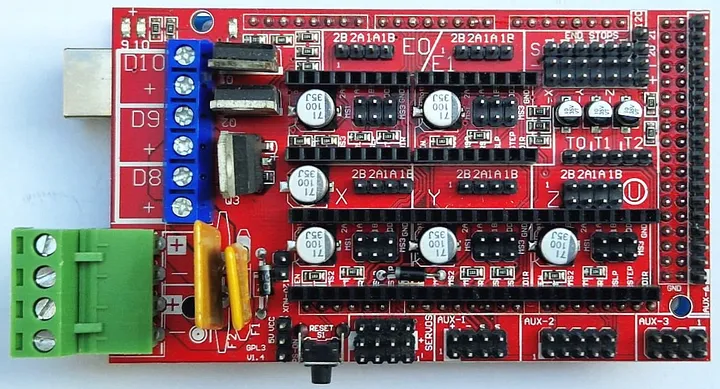
Gauthier Brière's firmware is what unlocked 3D-printer electronics for hot wire cutting: his GRBL Mega 5X, derived from GRBL, runs on an Arduino Mega 2560 topped with a RAMPS 1.4 shield. Properly configured, it drives the 4 axes of a hot wire CNC in G-code.
One problem remains: the wire heat. The board can't supply it — at least not at levels of any real use for hot wire cutting.
The RAMPS 1.4 shield (shown without its stepper drivers); the Arduino Mega 2560 sits underneath. See here for the HotWire4X firmware.
2022- Renaud
FilChaudNX speaks G-code
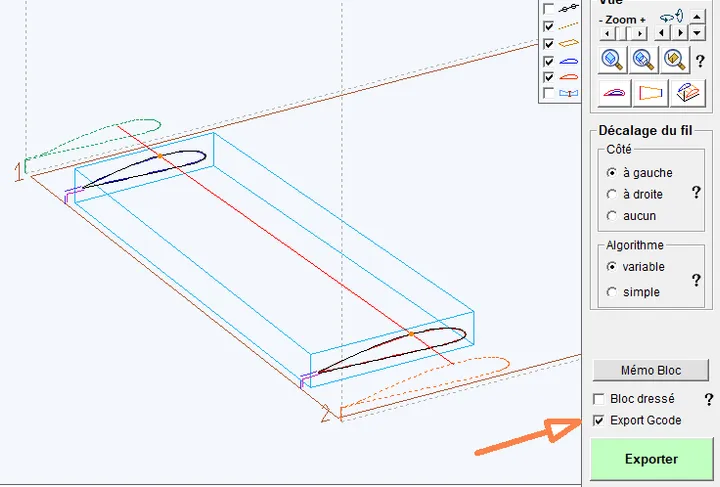
At Franck Aguerre's request, I implement G-code generation in FilChaudNX. It can now produce the cut files to send to the Mega 2560 — though sending them still takes a third-party tool, as FilChaudNX only speaks the IPL5X protocol for direct USB control.
Many modellers carry on this way... while waiting for something more integrated (HotWire4X — we're getting there, folks!).
The FilChaudNX cutting window, with G-code export enabled.
2022- Community
The BTT SKR Pico v1.0
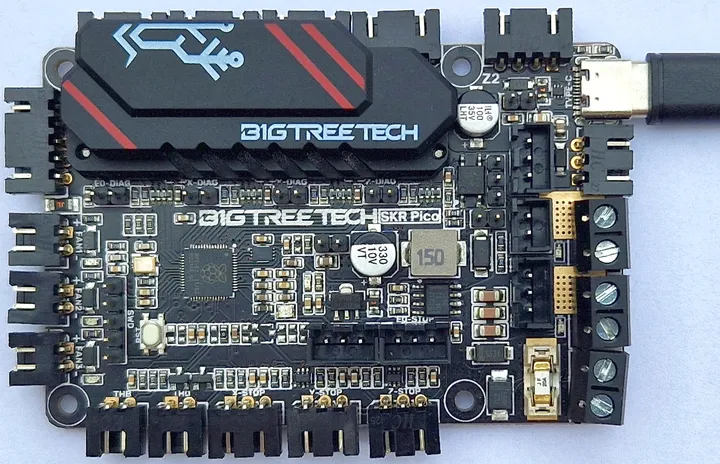
BigTreeTech releases a small 4-axis board for 3D printers. More powerful than the aging Mega 2560, it runs grblHAL, the "32-bit" descendant of the original GRBL firmware. Blogger RCKeith champions it for hot wire cutting, as he had done for the RAMPS.
Here again, the wire heat must be handled off the board to reach values versatile enough for hot wire work.
Big plus: the stepper driver current is set in software (the physical adjustment has always been a pain for hobbyists).
The BTT SKR Pico v1.0. See here for the HotWire4X firmware.
2026- Renaud
The MC4X evolves
I make my business fully nomadic: I stop producing the ready-to-assemble MC4X kits, to be done with inventory and its constraints.
The MC4X is not going away: it is evolving into the MC4X v2. The principle is still "ready to assemble" — but you now order the parts yourself, following my precise, fully documented instructions. I back you up from start to finish, so that everything works the moment you power it up.
For me, no more inventory. For you, the same guarantee of an efficient, accurate, durable, repairable machine — with the sound engineering and the cable chains that made the original MC4X a success. And of course, guidance in use, from the simplest project to the most complex.
The MC4X v2: same standards, a new way to get one.
2026
HotWire4X
After years of experimenting, I've finally found the right way to take FilChaudNX further.
What the French community invented, what Papy Kilowatt demonstrated, what the 5X Project made possible, and what twenty years of trial and error taught me: all of it becomes HotWire4X.
A program built for hot wire CNC cutting, with an integrated model designer and powerful automation: a CAD beginner can produce a complete model in an afternoon.
Icing on the cake: it is cross-platform, Windows and macOS. Apple fans will finally drive a hot wire CNC from their M-series MacBook!
Double icing: it directly drives, over USB, both IPL5X-type interfaces and GRBL (G-code) interfaces.
With this software, the MC4X v2 and this website: I'm putting the fizz back in the soda!
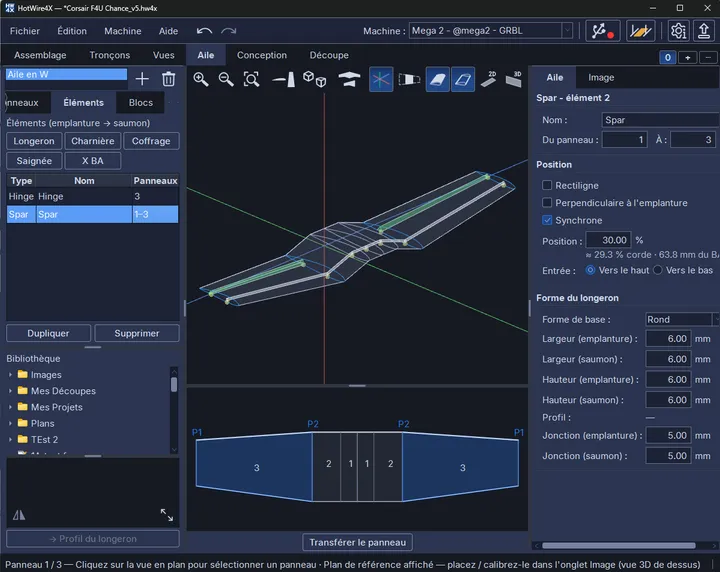
HotWire4X: the Wing section of the built-in model designer.
This site is built to keep growing — subscribe to my newsletter, The Wire, to hear about new releases.