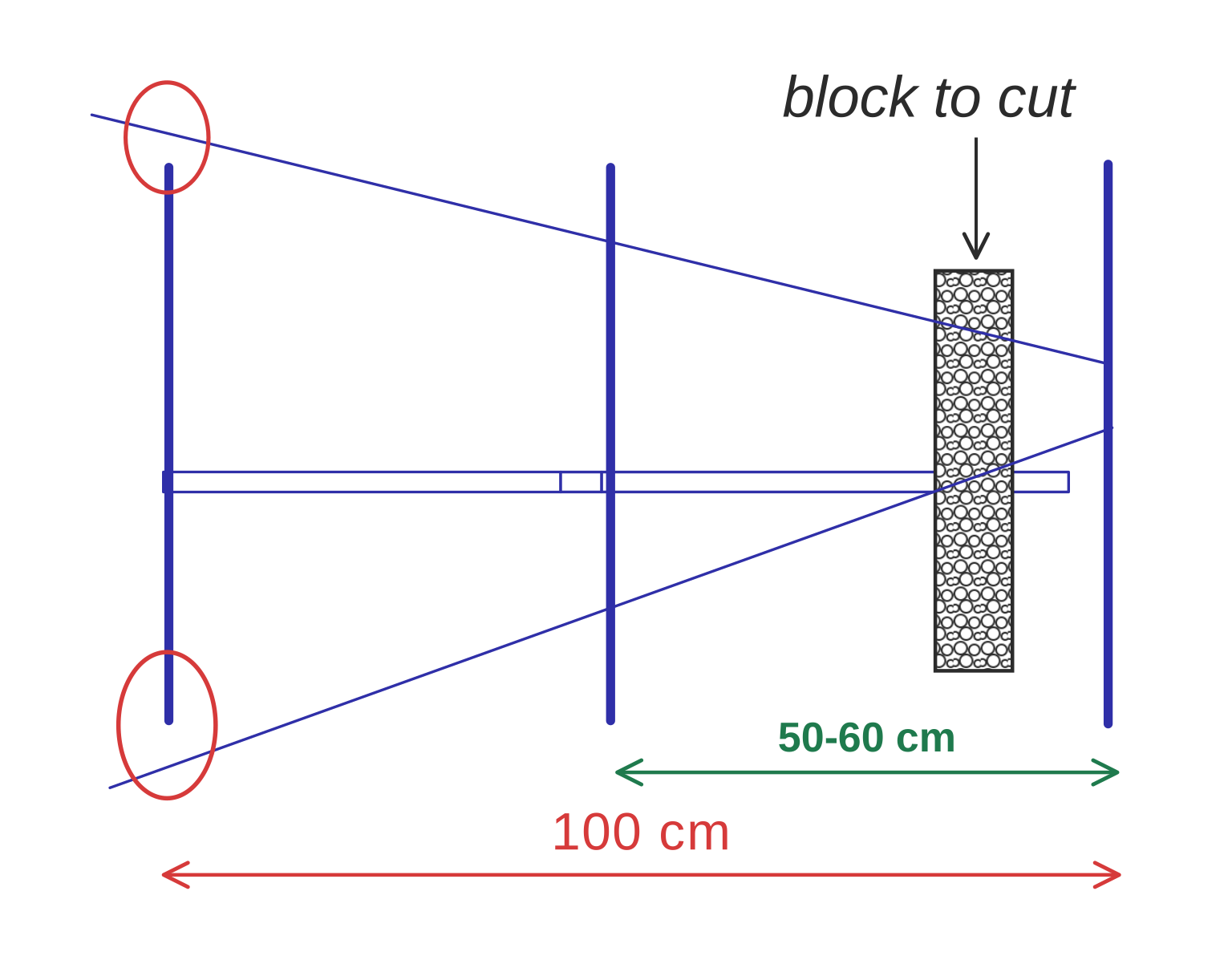
A wide table lets you cut long wing panels in one piece, but it rules out pronounced conical cuts: fuselages in sections, nacelles… a whole side of 4-axis cutting is out of its user’s reach.
With a narrow table, 50 to 60 cm, it’s the opposite: it allows tight cones, but not large panels. Large wings are then cut in sections, which will join perfectly if the material is properly calibrated.
A sentence I often hear
“I build 4 m gliders, so I need a table of at least 1.20 m.”
Yes… but no. It will be simpler in some situations, but it will severely limit the versatility of your cuts, conical cuts above all.
Why a wide table rules out cones
A conical cut is a part whose two faces are not the same size: a fuselage section that tapers towards the tail, for example. To cut it, the wire works on the diagonal.
On a wide table, two things then run short:
- the wire reserve, meaning the difference between the maximum usable length of the wire and the width of the table; this reserve is usually a fixed value, so it is proportionally smaller on a wide table than on a narrow one;
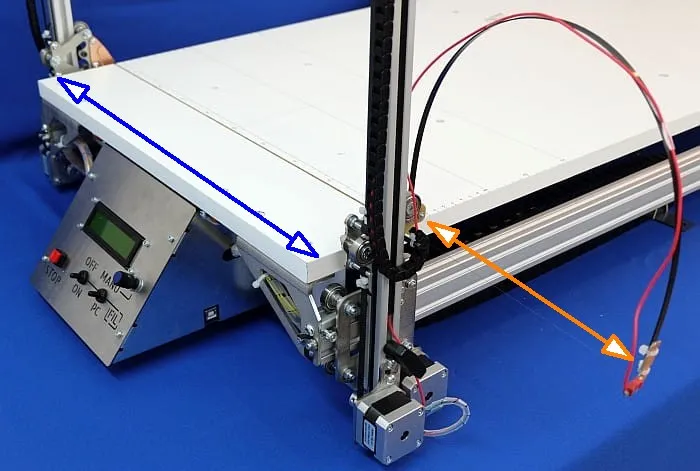
- the travel, meaning the distance each carriage can cover; beyond a certain angle, the horizontal and vertical travel is no longer enough to form the cone, but that limit angle is higher on a narrow table.
Can you have both?
Since each side is driven only in its own plane, you could imagine a machine with a variable-width bed.
It does exist, but it is usually an overcomplicated contraption that takes up space for a debatable gain.
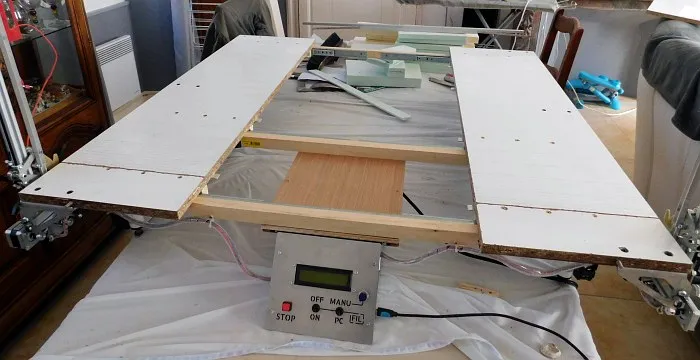
Not to mention that you will need two wires or two bows, and perhaps two power supplies for the wire (see below). In short, the added mechanical complexity costs more than the problem it solves.
So, which to choose?
If you build gliders and only ever cut wing cores for large-span sailplanes, there isn’t much of a question: a wide table is the better choice (but watch the wire’s power supply, see below).
In every other case, and especially if you are new to hot wire CNC, I think you should go for a table about 60 cm wide.
It won’t stop you from building large models (the joins are almost invisible), and it will be far more versatile for intricate cuts.
The proof
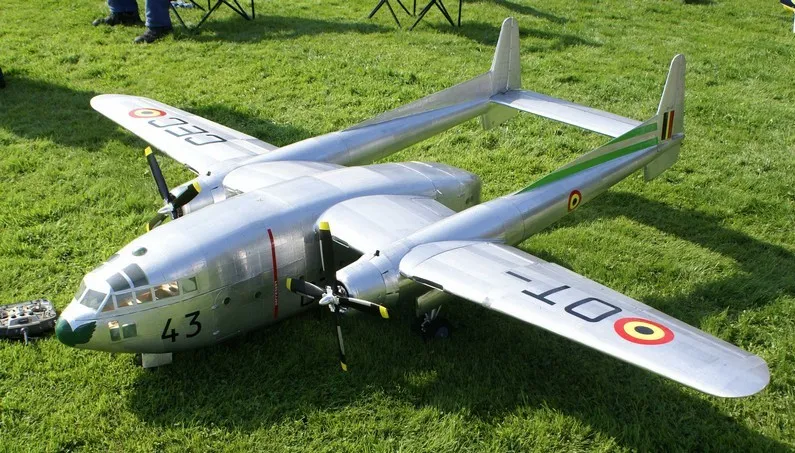
The late Papy Kilowatt, one of the pioneers of the hot wire community, built models with spans of nearly 3 m on a 60 cm wide bed. Wings in sections, conical parts thanks to the narrowness.
(You’ll meet this extraordinary character on the Story page.)
⚠️ Heating penalises the wide table a second time
Beyond roughly one metre of wire, a 48 V supply becomes marginal for heating the cutting wire. The longer the wire, the less power it gets per centimetre: the wide table pays twice, on the geometry and on the heating.
(If you only cut expanded polystyrene — EPS — the effect is less of a problem than with extruded polystyrene — XPS — or EPP.)
Conclusion
It’s the question what do you mostly want to make? that will decide the width of your machine’s bed.
In most cases, a “narrow” table is the right choice.
In some specific cases, a wide table can be defended. Then choose it knowingly: that’s exactly what this note is for.